Time and Calendar Class 3 Maths CBSE: A Master Guide
Time and Calendar Class 3 Maths CBSE: A Master Guide
Welcome to our comprehensive guide on Time and Calendar for Class 3 Maths CBSE. In this chapter, we will delve into the world of time and calendars, exploring the concept of time, its measurement, and the various ways we use calendars to organize our lives. The primary keyword for this chapter is Time and Calendar Class 3 Maths CBSE, and we will use this term throughout our discussion to provide a clear understanding of the subject matter. We will also examine how time and calendars are used in our daily lives, from scheduling appointments to planning vacations.
Introduction to Time
Time is a fundamental concept in our lives, and it is essential to understand how to measure and use it effectively. The concept of time is based on the idea that it is a linear concept, with past, present, and future. We measure time using units such as seconds, minutes, hours, days, weeks, months, and years. In this chapter, we will learn how to tell time using analog and digital clocks, as well as how to calculate time intervals and durations. The concept of time is closely related to the primary keyword, Time and Calendar Class 3 Maths CBSE, as it provides the foundation for understanding how calendars work.
We will also explore the concept of time zones and how they affect our daily lives. Time zones are regions on Earth that follow a uniform standard time, usually based on the mean solar time at a specific meridian. Understanding time zones is crucial for international communication, travel, and trade. For example, if it is 10:00 AM in New York, it would be 8:00 PM in Mumbai, India. This concept is essential for students to understand, as it helps them appreciate the global nature of time and how it affects our lives.
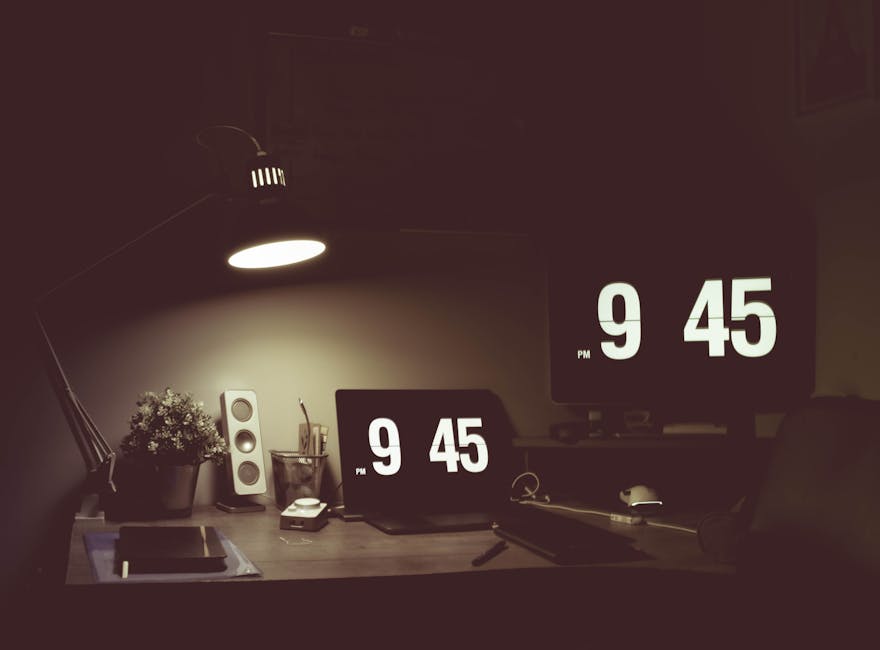
Photo by Julien Bachelet on Pexels
Understanding Calendars
A calendar is a system of organizing days in relation to the sun, moon, or other celestial bodies. The most commonly used calendar is the Gregorian calendar, which is based on the solar year and consists of 12 months. We will learn about the different types of calendars, including the lunar calendar, which is based on the cycles of the moon. The Gregorian calendar is used internationally and is the basis for most modern calendars. It is essential to understand how calendars work, as they help us plan our lives, schedule appointments, and keep track of important dates.
We will also explore the concept of leap years and how they affect the calendar. A leap year is a year that has 366 days, instead of the usual 365 days. This extra day is added to the month of February, which normally has 28 days. The concept of leap years is essential to understanding how calendars work, as it helps us keep our calendars in sync with the Earth's orbit around the sun. For example, the year 2020 was a leap year, and the next leap year will be 2024.

Photo by Matheus Bertelli on Pexels
Time and Calendar Problems
In this section, we will practice solving problems related to time and calendars. We will use LaTeX formulas to represent time intervals and durations. For example, if it takes 2 hours and 30 minutes to complete a task, we can represent this using the formula: $2 \times 60 + 30 = 150$ minutes. This formula helps us convert time intervals from hours and minutes to just minutes, making it easier to calculate and compare time durations.
We will also learn how to calculate time intervals and durations using addition and subtraction. For example, if it is 9:00 AM and we need to wait for 2 hours and 15 minutes, we can calculate the time using the formula: $9 \times 60 + 2 \times 60 + 15 = 615$ minutes. This formula helps us calculate the total number of minutes from a given time and a time interval, making it easier to determine the resulting time.
Let's consider a few examples to illustrate this concept:
- Example 1: If it takes 3 hours and 45 minutes to complete a task, how many minutes does it take? Solution: $3 \times 60 + 45 = 225$ minutes.
- Example 2: If it is 12:00 PM and we need to wait for 1 hour and 30 minutes, what is the resulting time? Solution: $12 \times 60 + 1 \times 60 + 30 = 810$ minutes, which is equivalent to 1:30 PM.
- Example 3: If it takes 2 hours and 15 minutes to travel from one city to another, and we leave at 8:00 AM, what is the arrival time? Solution: $8 \times 60 + 2 \times 60 + 15 = 555$ minutes, which is equivalent to 10:15 AM.
- Example 4: If we need to schedule a meeting for 2 hours and 30 minutes, and we start at 9:00 AM, what is the end time of the meeting? Solution: $9 \times 60 + 2 \times 60 + 30 = 570$ minutes, which is equivalent to 11:30 AM.
- Example 5: If it takes 1 hour and 45 minutes to complete a task, and we start at 10:00 AM, what is the completion time? Solution: $10 \times 60 + 1 \times 60 + 45 = 615$ minutes, which is equivalent to 11:45 AM.
Frequency Table
A frequency table is a table that shows the number of times each value occurs in a dataset. We can use frequency tables to analyze data related to time and calendars. For example, we can create a frequency table to show the number of days in each month of the year.
Here is an example of a frequency table:
| Month | Number of Days |
|---|---|
| January | 31 |
| February | 28/29 |
| March | 31 |
| April | 30 |
| May | 31 |
| June | 30 |
| July | 31 |
| August | 31 |
| September | 30 |
| October | 31 |
| November | 30 |
| December | 31 |
This frequency table shows the number of days in each month of the year. We can use this table to analyze data related to time and calendars, such as the number of days in a year or the number of months with 31 days.
Context & Moral Lesson
In this section, we will explore the context and moral lessons related to time and calendars. We will learn about the importance of punctuality, time management, and respect for other people's time. We will also discuss the concept of time as a limited resource and how we should use it wisely.
One of the most important moral lessons related to time and calendars is the importance of punctuality. Punctuality is the habit of being on time and respecting other people's time. It is essential to be punctual in our daily lives, as it shows respect for other people and helps us build strong relationships. We can use the concept of time and calendars to teach children the importance of punctuality and time management.
For example, we can use a calendar to schedule appointments and meetings, and we can use a clock to keep track of time. We can also teach children how to prioritize tasks and manage their time effectively. By teaching children the importance of punctuality and time management, we can help them develop essential life skills that will benefit them throughout their lives.
Conclusion
In conclusion, time and calendars are essential concepts in our lives, and it is crucial to understand how to use them effectively. We have learned about the concept of time, its measurement, and the various ways we use calendars to organize our lives. We have also explored the concept of time zones, leap years, and frequency tables. By mastering these concepts, we can improve our time management skills, become more punctual, and develop a deeper appreciation for the complexity of time and calendars.
Practice Quiz
1. What is the primary keyword for this chapter?
Click to Show Answer
2. How many minutes are in 2 hours and 30 minutes?
Click to Show Answer
3. What is the resulting time if it is 12:00 PM and we need to wait for 1 hour and 30 minutes?
Click to Show Answer
4. How many days are in the month of February in a leap year?
Click to Show Answer
5. What is the importance of punctuality in our daily lives?
Click to Show Answer
Frequently Asked Questions
Q: What is the primary keyword for this chapter?
A: The primary keyword for this chapter is Time and Calendar Class 3 Maths CBSE.
Q: How many minutes are in 2 hours and 30 minutes?
A: There are 150 minutes in 2 hours and 30 minutes, calculated using the formula: $2 \times 60 + 30 = 150$ minutes.
Q: What is the resulting time if it is 12:00 PM and we need to wait for 1 hour and 30 minutes?
A: The resulting time is 1:30 PM, calculated using the formula: $12 \times 60 + 1 \times 60 + 30 = 810$ minutes, which is equivalent to 1:30 PM.
Q: How many days are in the month of February in a leap year?
A: There are 29 days in the month of February in a leap year.
Q: What is the importance of punctuality in our daily lives?
A: Punctuality is essential in our daily lives as it shows respect for other people's time and helps us build strong relationships. It is also crucial for effective time management and can help us achieve our goals and objectives.
Comments
Post a Comment